Safety review
Is Character.AI Safe for Kids?
Published August 18, 2026 · By the Kidgeni team
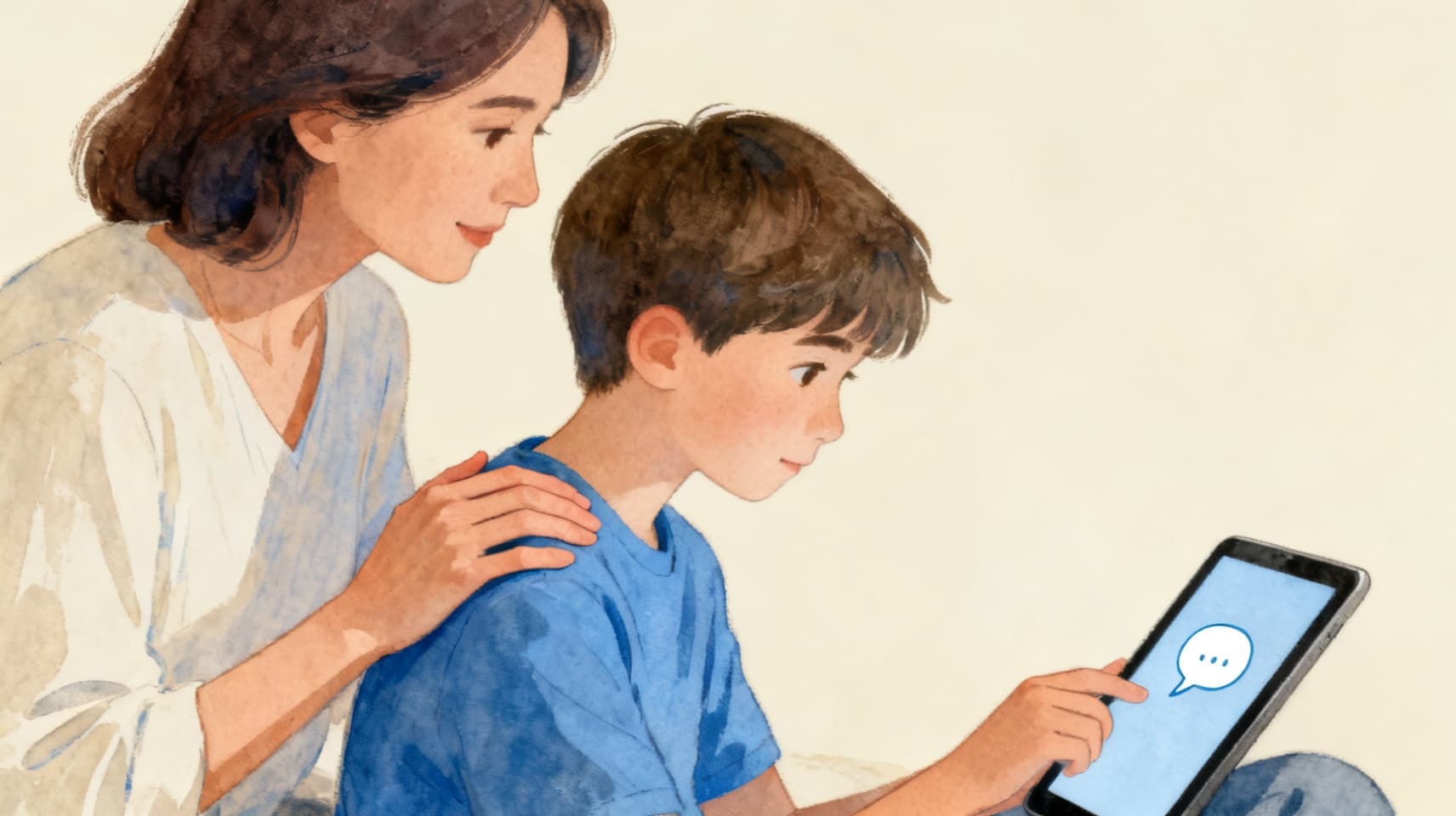
No — and as of late 2025, Character.AI itself agrees for open-ended chat: the company banned users under 18 from free-form conversations with its chatbots, restricting minors to structured creative features instead. The ban followed wrongful-death lawsuits involving teenagers, settled in January 2026. For children under 13 the platform was never appropriate; for teens, even the restricted mode deserves a parent's active attention.
What Character.AI is
Character.AI is a platform for open-ended conversations with AI personas — fictional characters, celebrities, invented friends. Its entire product is the thing safety researchers worry most about for young people: an emotionally engaging companion that stays in character, remembers you, and is optimized to keep the conversation going.
What changed: the under-18 ban
In late 2025, Character Technologies announced it would remove open-ended chat for users under 18, with enforcement in place by November 25, 2025. Minors are limited to structured creative features — story-building and similar 'Stories' modes — rather than free-form companion chat. The company also added age-verification tools, parental controls with time tracking, and session-time notifications for minors.
It matters to be honest about why: the changes followed lawsuits by families of teenagers, including a wrongful-death case involving 14-year-old Sewell Setzer III, which Character.AI and Google settled alongside related suits in January 2026. This is not a company that quietly tightened settings; it is a company whose product for minors was reshaped by tragedy and litigation.
What that means at each age
- Under 13: not appropriate, full stop — and not permitted by the platform's own terms.
- 13–17: open-ended chat is now blocked by policy. The remaining creative modes are safer by design, but age gates depend on verification that determined teens have historically found ways around — treat the ban as a policy, not a wall.
- Any age: if your child already used Character.AI heavily, the shutdown of a companion they were attached to is itself worth a real conversation, not just a settings change.
The deeper issue: companion chat and kids
Even with good moderation, open-ended AI companions are built to feel like relationships. Children and young teens are exactly the users least equipped to hold the line between 'engaging character' and 'someone who knows me.' That structural concern — not any single bad transcript — is why safety organizations recommend against AI companions for minors generally, and why Character.AI's own resolution was to remove the experience for them rather than filter it.
If your kid loves the creative side
The healthy thing inside Character.AI — inventing characters and stories — doesn't require a companion relationship. Kids can get the creation without the parasocial chat: writing and illustrating their own characters in tools built for children, where a grown-up owns the account and nothing talks back at 2am. That's the design line Kidgeni sits on deliberately: kids make art, stories, and books; there is no open-ended chatbot to bond with.
Questions parents ask next
Can kids still use Character.AI at all?
Users under 18 can no longer have open-ended chats; the platform restricts them to structured creative features like story-building, enforced since November 25, 2025, with age verification rolling out. Under-13s are not permitted at all.
Why did Character.AI ban minors from chat?
The ban followed mounting safety pressure and lawsuits from families of teens — including a wrongful-death case settled in January 2026 — plus regulatory attention on AI companions and minors generally.
My teen is grieving a Character.AI companion. Is that normal?
Yes — attachment to an AI companion is a designed outcome, not a character flaw. Take it seriously, talk about it without mockery, and if the feelings are heavy, loop in a counselor. The attachment being real is exactly why the product changed.
What's a safer creative alternative for a Character.AI-age kid?
Look for tools where the AI is a making-tool rather than a friend: the child creates art, stories, or characters, a grown-up controls the account, and there is no persistent persona to bond with. Kidgeni is built that way for ages 5–12; for teens, creative writing tools with no companion framing are the equivalent.
Sources
Researched August 18, 2026. Products change; we re-check and re-date this article when they do.
Creation without the companion
Kidgeni gives kids the making — art, stories, books — with no chatbot to bond with and a grown-up in control.