Guide
AI Art Activities to Do With Your Kids This Weekend
Published August 18, 2026 · By the Kidgeni team
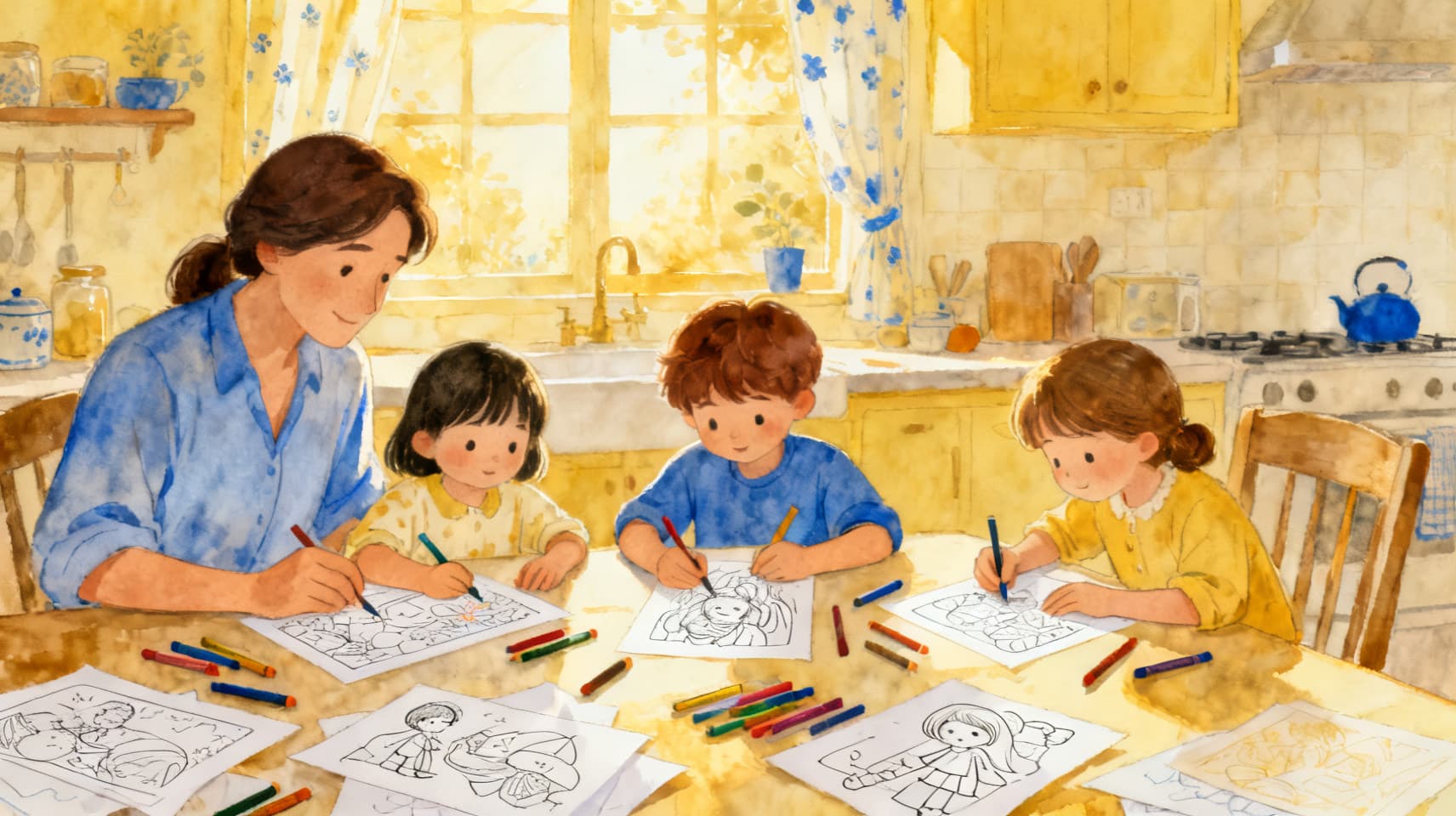
The best AI art activities for kids use the AI for one spark and then get out of the way: generate a coloring page and reach for crayons, roll a silly story premise and act it out, design a character and draw its friend by hand. Here are seven that work for ages 5–12, most of which end with the screen off.
1. The custom coloring page (ages 4–10)
Let your kid describe the coloring page of their dreams — 'a T-rex birthday party!' — generate it as clean line art, print it, and hand over the crayons. Screen time: two minutes. Coloring time: forty. This is the single highest-ratio AI activity we know, and it works because the AI does the one thing (drawing outlines) that was blocking the kid's own handwork.
2. Prompt battle (ages 6–12, two players)
Same prompt theme — 'the world's worst superhero' — each player writes their own version secretly, generate both, and a neutral judge (dog, grandparent) picks a winner. Teaches that words in change pictures out, which is prompt-craft, which is the durable skill.
3. Guess the prompt (ages 7–12)
One player generates an image from a secret prompt; everyone else has three guesses at what the prompt was. Reverse-engineering an image into words is descriptive writing practice wearing a party hat.
4. Illustrate the family legend (ages 5–12)
Every family has one — the camping trip with the raccoon, the spaghetti incident. Have your kid retell it and generate the illustrations scene by scene, then read the 'documentary' aloud at dinner. Bonus: grandparents weep.
5. Character, then friend — by hand (ages 5–10)
Generate a character your kid invents. Then the twist: draw that character's best friend with actual markers, no AI allowed. The generated art becomes reference material, and the hand drawing gets the pride of place on the fridge.
6. The style safari (ages 6–12)
One subject — their pet, ideally — rendered in five styles: crayon, claymation, pixel art, stained glass, comic. Talk about which they'd hang up and why. It's an art-appreciation lesson disguised as making Sprinkles the hamster look majestic.
7. Make a real book (ages 6–12, rainy afternoon)
The boss level: one idea becomes a complete illustrated storybook — cover, pages, the works — with your kid as author and art director. Print it and it goes on the actual bookshelf, which quietly reframes the whole question of what a kid can make.
The pattern in all seven
AI generates a spark; the child does the imagining, deciding, and (often) the hand-making. Any moderated kid tool can run these — we naturally built Kidgeni so all seven work inside it, coloring pages and books included, with a grown-up owning the account throughout.
Questions parents ask next
How much screen time do these activities involve?
Deliberately little — most use the screen for a few minutes of generating and move to paper, printing, or acting. The coloring-page activity is roughly 2 minutes of screen to 40 of crayon.
What do I need to run these at home?
A kid-safe AI art tool (moderated, grown-up-owned account), a printer for the paper-based ones, and crayons. Kidgeni covers the tool side free to start; any printer does.
Which activity should we try first?
The custom coloring page — it's the fastest win, works from age 4, and ends with the screen off. If your kid loves it, the free printable library and the coloring page maker are the natural next stop.
Start with activity #1
Grab free printable coloring pages now, or let your kid invent their own with the coloring page maker.